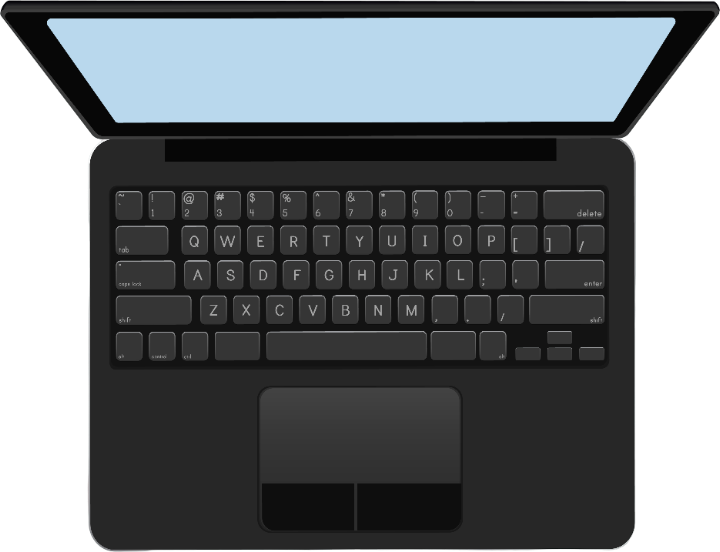
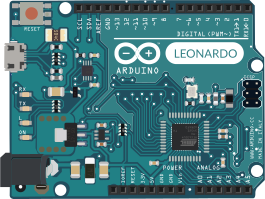
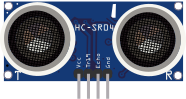
Describe it
Type what you want to build in plain language. A soil moisture sensor that alerts me when my plant needs water.
That's enough — Sentinel understands hardware.
Describe what you want to build. Sentinel picks the components, draws the circuit, writes the firmware, and flashes your hardware—directly from the browser. No toolchain. No guesswork. No gatekeeping.
From a sentence to a living device, without ever leaving the browser.
Type what you want to build in plain language. A soil moisture sensor that alerts me when my plant needs water.
That's enough — Sentinel understands hardware.
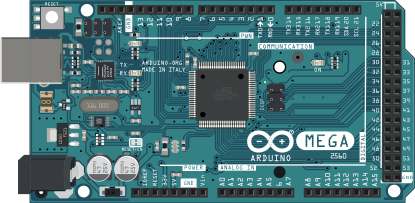
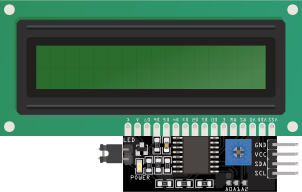
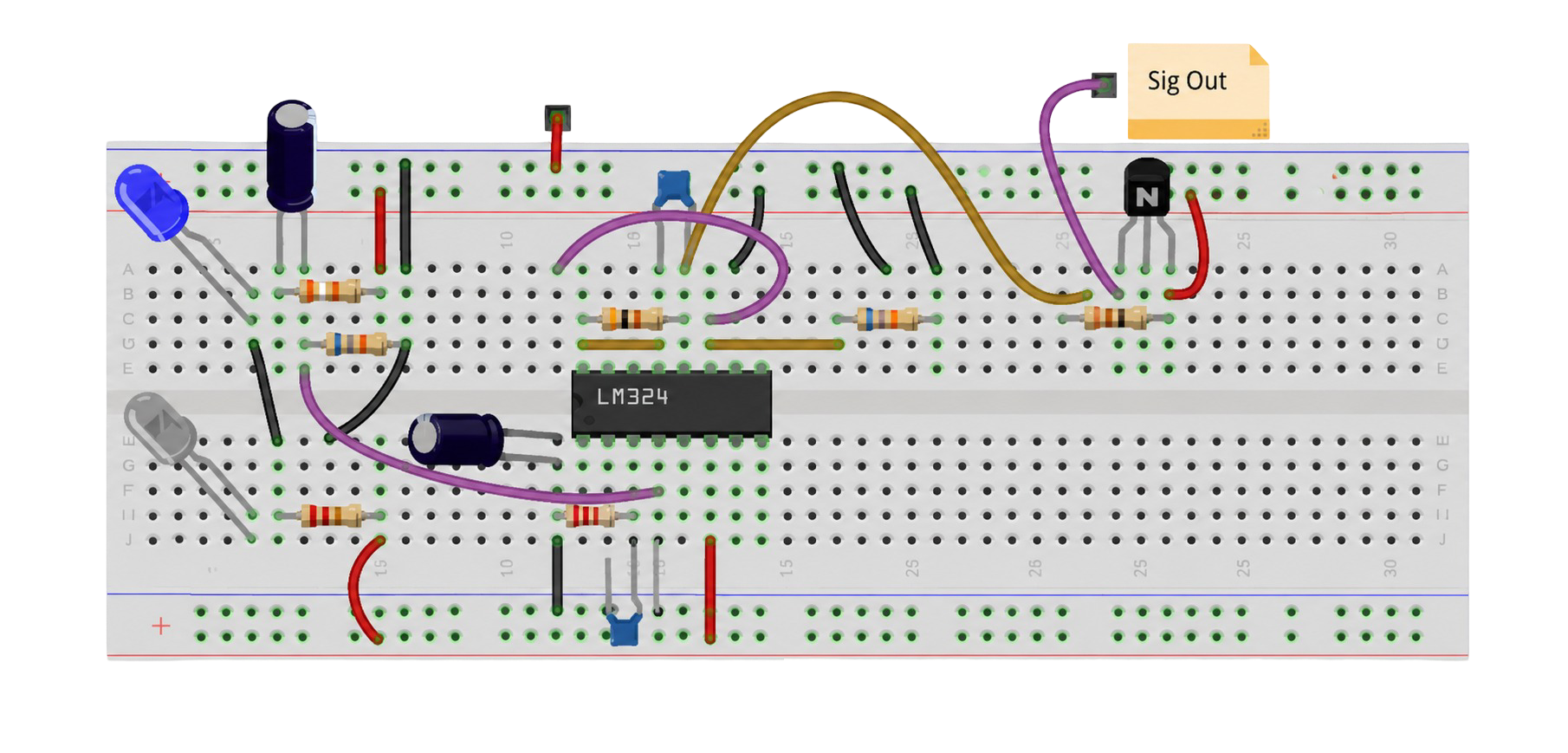
An auto-generated wiring schematic appears — component by component, connection by connection. You know exactly what goes where before you touch a single wire.
An AI agent expert in embedded systems writes production-ready code for your exact setup. Edit it in plain language. Add a low-power mode.
Done.
Connect your microcontroller via USB. Click Upload. Sentinel flashes your device directly from the browser — no IDE, no drivers, no command line.
Serial data streams back to the IDE. AI reads your sensor output and explains what it means in plain English. Your device is alive.
Every component in your build is purchasable in one click. An exact, curated kit — no wrong parts, no wasted orders.
Sentinel isn't built for one kind of person. It's built for anyone with an idea and the will to make it real — whether you've shipped firmware for years or you're flashing your first board today.
I lose more days to setup than to the build itself.
You know exactly what you want to make. What slows you down is toolchain setup, library conflicts, and environment hell. Sentinel collapses that friction so your time goes to the problem, not the plumbing.
I have the ideas. I've never had a real path to ship them.
School students, engineering batches, robotics trainees — you've never been short on ideas, only on a way in. Sentinel removes the wall between wanting to build and actually building.
Websites don't fix broken irrigation systems. Apps don't monitor air quality in a classroom. The impact that matters is made of sensors and actuators and microcontrollers — and it has been locked behind years of expertise most people don't have.
A few thousand hardware engineers cannot solve problems at the scale of billions of people. But if millions of teachers, farmers, students, and tinkerers could build the tools they need — the leverage changes entirely.
A world where technology is accessible, local, human-scale, and ecological — that future doesn't arrive by itself. It gets built, one device at a time, by people who finally have the tools to build it.
That's what we're building toward. We're rolling out access in waves — join the waitlist and we'll bring you in early.